
7 Side Effects of Poor Posture That May Be Causing Your Neck and Back Pain
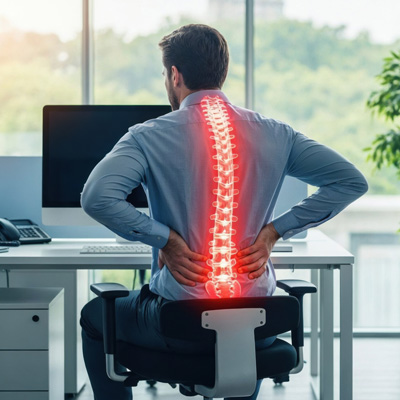
If your neck feels stiff and your back aches by the end of the day, your posture could be the reason. The side effects of poor posture build up slowly, and most people never connect them to that hunched position at a desk or on a phone.
At North Alabama Spine & Rehab in Huntsville, Dr. Adam Shafran, DC has spent 30 years helping people trace neck and back pain back to its real structural cause. Below are seven warning signs you should know, written in plain words so you can catch them early.
How Poor Posture Turns Into Neck and Back Pain
Your spine sits at the center of your musculoskeletal system, the network of bones and muscles that holds your body up. It is not straight. It has three natural curves, at your neck, your mid back, and your lower back. These curves act like springs that spread the weight of your body evenly. Good posture keeps them in line so your bones, discs, and muscles share the load.
Poor posture breaks that balance. When you slouch or push your head forward, the neck part of your spine, called the cervical spine, has to carry far more weight than normal. Research has shown that tilting your head forward can add up to 60 pounds of force on your neck. That added pressure pulls on your muscles, strains your joints, and over time leads to real pain and discomfort.
If you’ve been struggling with any of the following symptoms, poor posture may be an underlying cause worth considering.
See more: What is the Best Mattress for Back Pain? Advice from a Chiropractor
1. Constant Neck Pain and Stiffness
Neck pain is the most common warning sign. When your head sits forward instead of over your shoulders, the muscles in your neck stay tense all day just to hold it up. Those muscles get tired, tight, and sore, which is why a stiff neck so often shows up after hours at a screen. Forward head posture also presses on the small facet joints at the back of each vertebra, which can make the pain sharper when you turn your head.
2. Upper and Lower Back Pain
Poor posture rarely stops at your neck. Slouching forward rounds your upper back and flattens the inward curve of your lower back, also called the lumbar spine. Your back muscles then work overtime to hold you upright, which leaves them tired and aching. Many people feel this as a dull pain between the shoulder blades or a deep ache low in the back after sitting too long.
3. Tension Headaches
Bad posture can lead to headaches that start in your neck. When the muscles at the base of your skull stay tight from holding your head forward, they pull on the nerves and soft tissue around your head. This builds into tension headaches, a dull, squeezing pain that often sits behind the eyes or across the forehead. Easing the strain behind those tight muscles often calms these headaches as well.
4. Tight, Sore Muscles and Muscle Imbalance
Poor posture makes some muscles work too hard while others barely work at all. Over time this creates a muscle imbalance. The muscles across the front of your chest get short and tight, while the muscles between your shoulder blades grow long and weak. This imbalance keeps pulling your shoulders forward, which makes everything worse and leaves you with sore muscles that never fully relax.
5. Disc Problems and Pinched Nerves
Here is where slouching turns from sore muscles into lasting damage. The steady pressure compresses the spinal discs, the soft cushions between the bones of your spine. Over years, this wear and tear can lead to herniated discs or even degenerative disc disease. When a disc presses on a nearby nerve, you may feel tingling, numbness, or a shooting pain down one arm or leg. Pain that runs down the leg, called sciatica, is a common sign that poor posture has begun to affect your nerves.
6. A Stiff Spine and Chronic Pain
The longer poor posture goes uncorrected, the harder your spine becomes to move. Joints that stay slouched get stiff, and the muscles around them lose their stretch. You may notice it is harder to turn your head, reach overhead, or stand fully straight. Left alone, these short term aches can turn into chronic pain that takes a real toll on your quality of life.
7. Trouble Breathing
This one surprises most people. When poor posture rounds your shoulders and caves in your chest, it lowers your lung capacity. The rib cage cannot open fully, and the diaphragm, the main muscle for breathing, cannot drop as far as it should. The result can be shallow breaths, less oxygen, and even breathing problems over time. Sitting and standing tall gives your lungs more room and supports a healthier neck and back.
How We Help Correct Poor Posture at North Alabama Spine & Rehab
The good news is that most of these problems improve once you treat the cause. At North Alabama Spine & Rehab, we focus on the structure behind your pain, not only the symptoms. Dr. Adam Shafran, DC holds certification in Chiropractic BioPhysics (CBP), a method built around posture correction and restoring the spine to proper alignment. His 30 years in practice and advanced training from the Spine Research Institute of San Diego give patients a clear, evidence based path back to comfort.
Your treatment plan may include corrective chiropractic to realign the spine, spinal decompression to take pressure off irritated discs, and guided rehab with our physical therapist assistant, Jessica Davenport. Every plan is personalized, because the posture habits behind each person’s pain are different.
When Poor Posture Pain Needs a Professional
Mild stiffness from one long day often eases with rest and gentle movement. But pain that keeps returning, spreads, or comes with tingling or numbness is a signal to get checked. These can point to disc or nerve problems that grow worse without care.
This article is general information, not medical advice for your situation. If poor posture may be causing your neck and back pain, it is important to consult a licensed chiropractor or physical therapist who can examine your spine and build a plan that fits you.
Frequently Asked Questions
Can poor posture really cause neck and back pain?
Yes. Poor posture shifts your body weight onto muscles, joints, and discs that are not built to carry it, which slowly leads to neck and back pain.
How long does it take to fix pain caused by bad posture?
It depends on how long the habit has been present and how much strain it created. Many people feel relief within a few weeks of corrective care, while deeper changes take longer.
What is the fastest way to improve my posture at home?
Keep your head over your shoulders and your screen at eye level instead of looking down, and use an ergonomic chair when you can. Standing up to move every hour also keeps the muscles that support good posture from getting stiff.