
Chiropractic for Spinal Stenosis: Can It Help Relieve Symptoms?

Chiropractic for spinal stenosis may be considered when pain, stiffness, or nerve related symptoms make standing, walking, or everyday activities difficult. The goal is not to reverse the narrowing in the spine. Instead, conservative care may focus on improving movement, reducing mechanical stress, and helping manage symptoms.
At North Alabama Spine & Rehab in Huntsville, AL, we evaluate how your spine moves, where symptoms occur, and what may be contributing to them before deciding whether chiropractic care is appropriate.
What is spinal stenosis?
Spinal stenosis occurs when spaces within the spine become narrower. This can reduce the room available for the spinal cord or nerve roots and may lead to pain or neurological symptoms.
The condition most often affects the lower back or neck. Age related changes are a common cause. Disc degeneration, bulging discs, thickened ligaments, bone spurs, arthritis, and spondylolisthesis can all contribute to narrowing. Some people may have spinal stenosis without noticeable symptoms, while others develop pain, numbness, or weakness when nearby nerves are affected.
There are two common types:
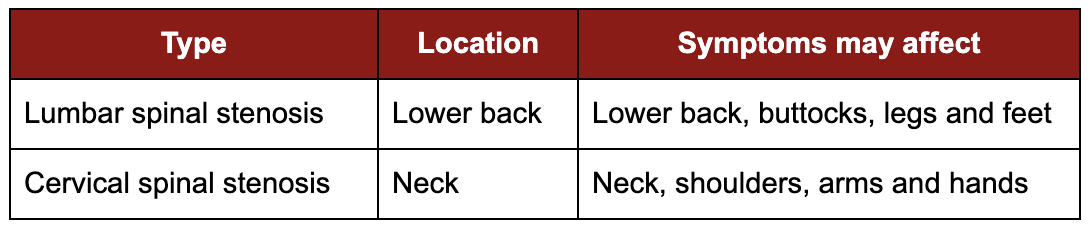
Lumbar spinal stenosis is especially common with age and is often associated with difficulty standing or walking for longer periods.
What does spinal stenosis feel like?
Symptoms depend on where the narrowing occurs and whether it affects nearby nerves.
Lumbar spinal stenosis may cause:
- Lower back pain
- Pain that travels into the buttocks or legs
- Numbness or tingling in the legs or feet
- Leg weakness
- Cramping or heaviness in the legs
- Difficulty standing or walking for long periods
A common pattern is for leg symptoms to become worse while standing or walking and improve when sitting or leaning forward. This is sometimes called neurogenic claudication.
Cervical spinal stenosis can cause neck pain along with numbness, tingling, or weakness that travels into the arms or hands.
Because these symptoms can overlap with other spinal conditions, symptoms alone cannot confirm spinal stenosis.
Can chiropractic help with spinal stenosis?
Chiropractic care cannot remove bone spurs or reverse the physical narrowing caused by spinal stenosis. However, it may be part of a conservative approach for some people, with care focused on managing symptoms, supporting movement, and reducing mechanical stress on the spine.
Whether chiropractic care is appropriate can depend on:
- Where the stenosis is located
- How severe the symptoms are
- Whether numbness or weakness is present
- How symptoms affect walking and daily activities
- Other spinal conditions
- Overall health
This is why an evaluation matters before beginning care.
How chiropractic for spinal stenosis may help
Chiropractic care may help manage some of the movement and mechanical problems that occur alongside spinal stenosis. The approach should be based on your symptoms and how the condition affects your daily activities.
Improving spinal movement
Pain and stiffness can limit how comfortably you move. When appropriate, chiropractic care may help improve restricted movement and reduce mechanical stress on the spine.
Addressing mechanical stress
Spinal stenosis often occurs alongside disc degeneration, arthritis, or changes in spinal alignment. Chiropractic care may address mechanical factors that contribute to discomfort or limited movement.
Supporting posture and movement
Posture and movement patterns can affect how stress is distributed through the spine. Identifying these patterns can help guide corrective exercises and other conservative care based on your individual needs.
Where spinal decompression may fit into care
Spinal decompression is different from a chiropractic adjustment. It uses controlled mechanical traction to gently stretch the spine.
At North Alabama Spine & Rehab, spinal decompression is provided using the Accu SPINA® and MTD 4000 Decompression System. The practice uses this therapy for spinal problems such as herniated discs, sciatica, and degenerative disc disease.
For someone with spinal stenosis, whether decompression is appropriate depends on what is contributing to the symptoms and the person’s overall spinal condition. It should not be assumed that every person with stenosis is a candidate.
An evaluation can help determine whether spinal decompression is right for you and whether it has a reasonable role in a broader conservative care plan.
What to expect from an evaluation
Finding spinal stenosis on an X-ray, MRI, or other imaging study is only part of the picture. Your symptoms and physical function also matter.
At North Alabama Spine & Rehab, an evaluation may look at:
- Where your pain or other symptoms occur
- Whether symptoms travel into an arm or leg
- What activities make symptoms better or worse
- Your posture and movement
- Strength and other functional findings when appropriate
- Relevant imaging and health history
This information helps determine whether conservative care is appropriate and which approach makes sense for your specific findings.
Ways to manage spinal stenosis symptoms at home
A few simple changes may help reduce discomfort and make daily activities easier:
- Take short breaks. Sit and rest if prolonged standing or walking increases symptoms.
- Stay gently active. Try short walks or other low impact activities you can tolerate.
- Change positions often. Avoid sitting or standing in one position for too long.
- Find comfortable positions. Sitting or leaning slightly forward may ease lumbar spinal stenosis symptoms for some people.
- Exercise within your limits. Stop or modify movements that increase pain, numbness, or weakness.
If symptoms continue to affect walking or daily activities despite these changes, consider getting evaluated.
Finding the right approach for spinal stenosis
Spinal stenosis does not affect everyone the same way. Some people have mild symptoms that can be managed conservatively, while others develop neurological problems that require medical or surgical evaluation.
Chiropractic care does not reverse spinal stenosis, but it may have a role in managing pain, movement, and mechanical stress for appropriately selected patients. Spinal decompression or corrective care may also be considered when the findings support their use.
If back or leg symptoms are making it harder to stand, walk, sleep, or manage everyday activities, contact us to schedule an evaluation and discuss which next steps may be appropriate.
Frequently asked questions
Is chiropractic safe for lumbar spinal stenosis?
It may be appropriate for some people, but treatment should depend on the severity of the stenosis, symptoms, neurological findings, and overall health. An evaluation should come before treatment.
Can spinal decompression help spinal stenosis?
It depends on the individual condition and what is contributing to the symptoms. Spinal decompression should not be considered an automatic treatment for every case of spinal stenosis.
What should you avoid with spinal stenosis?
There is no single list that applies to everyone. Activities or positions that consistently increase pain, numbness, weakness, or other neurological symptoms should be modified and discussed with a healthcare provider.