
10 Root Causes of Fibromyalgia: Beyond “Just Symptoms”

Understanding the root causes of fibromyalgia changes everything. This isn’t a mysterious condition without explanation – it’s a nervous system dysfunction with identifiable triggers. When you address these underlying causes instead of just chasing symptoms, real healing becomes possible.
Let’s explore the ten most common root causes.
10 Potential Root Causes & Triggers of Fibromyalgia
1. Upper Cervical Misalignment
Your upper cervical spine (C1-C2 vertebrae) houses your brainstem – the control center for pain processing, autonomic function, and sensory integration.
When these vertebrae misalign, they create mechanical stress on the brainstem. This irritation disrupts normal pain processing, potentially causing widespread pain hypersensitivity characteristic of fibromyalgia.
Brainstem dysfunction effects:
- Abnormal pain signal amplification
- Altered sensory processing
- Autonomic nervous system dysregulation
- Sleep disruption
2. Chronic Spinal Cord Tension
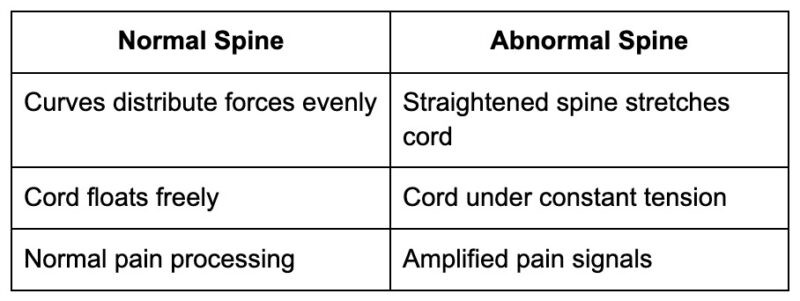
Loss of normal spinal curves – from poor posture, injuries, or degenerative changes – creates chronic tension on the spinal cord. Think of it like a guitar string pulled too tight.
This constant mechanical stress irritates the entire nervous system, potentially creating system-wide pain sensitivity.
How spinal curves affect cord tension:
3. Autonomic System Imbalance
Fibromyalgia patients often show profound autonomic nervous system dysfunction – specifically, chronic sympathetic (stress) overdrive with inadequate parasympathetic (relaxation) activation.
Sympathetic overdrive effects:
- Elevated cortisol and stress hormones
- Disrupted sleep architecture
- Impaired tissue healing
- Increased pain sensitivity
- Digestive problems
- Temperature regulation issues
4. Physical Trauma or Whiplash
Many fibromyalgia patients trace symptom onset to specific physical trauma – car accidents, falls, sports injuries. The trauma doesn’t just damage tissues – it can fundamentally alter how your nervous system processes pain.
Post-trauma fibromyalgia mechanism:
- Initial injury creates acute pain signals
- Nervous system becomes hypervigilant
- Pain processing centers remain sensitized
- Normal sensations interpreted as painful
- Widespread pain develops months later
5. Neuro-Inflammation
Recent research reveals that fibromyalgia involves actual neuroinflammation – inflammation of brain and spinal cord tissues, particularly in pain-processing regions.
This isn’t “just inflammation” you can fix with ibuprofen. It’s specialized glial cell activation creating chronic sensitization of pain pathways.
Neuroinflammation markers in fibromyalgia:
- Elevated inflammatory cytokines in cerebrospinal fluid
- Activated microglia in brain imaging
- Increased substance P (pain neurotransmitter)
- Reduced endogenous pain inhibition
6. Chronic Emotional or Psychological Stress
The mind-body connection isn’t metaphorical – it’s biochemical. Chronic stress literally lowers your pain threshold through hormonal and neurological mechanisms.
Stress-pain pathway:
- Chronic stress elevates cortisol
- Cortisol disrupts normal pain modulation
- HPA axis (hypothalamic-pituitary-adrenal) becomes dysr egulated
- Pain sensitivity increases system-wide
- Stress about pain creates more stress – vicious cycle
This doesn’t mean fibromyalgia is “psychosomatic”. It means chronic stress is one of multiple biological root causes of fibromyalgia.
7. Sleep Architecture Disturbance
Fibromyalgia patients consistently show disrupted Stage 4 deep sleep – the restorative phase where tissue repair occurs and pain-inhibiting hormones release.
Why sleep disruption matters:
- Growth hormone (tissue repair) releases during Stage 4 sleep
- Without deep sleep, tissues can’t heal properly
- Chronic pain worsens with inadequate recovery
- Sleep disruption itself increases pain sensitivity
8. Hormonal Dysregulation
The HPA axis controls your stress hormone response. In fibromyalgia, this system often shows blunted cortisol rhythms and exaggerated stress responses.
HPA dysfunction effects:

This hormonal imbalance creates system-wide dysfunction affecting pain processing, immune function, sleep, and energy production.
9. Mitochondrial Dysfunction
Your cells’ mitochondria produce ATP – the energy currency your body needs for all functions, including healing and pain regulation.
Fibromyalgia patients often show mitochondrial dysfunction, creating an energy crisis that impairs normal cellular function.
Mitochondrial problems in fibromyalgia:
- Reduced ATP production
- Increased oxidative stress
- Impaired cellular repair
- Chronic fatigue
- Reduced exercise tolerance
10. Gut-Brain Axis Issues
Your gut microbiome directly influences brain function, immune activation, and systemic inflammation through the gut-brain axis.
“Leaky gut” (increased intestinal permeability) allows bacterial toxins into your bloodstream, triggering widespread inflammation that affects pain processing.
Gut-fibromyalgia connection:
- Dysbiotic (imbalanced) microbiome common in fibromyalgia
- Increased intestinal permeability
- Systemic inflammatory activation
- Altered neurotransmitter production
- Impaired pain modulation
The Chiropractic BioPhysics (CBP) Solution for Fibromyalgia
At our chiropractor Huntsville practice, we use Chiropractic BioPhysics to address structural root causes of fibromyalgia – particularly upper cervical misalignment and abnormal spinal curves creating cord tension.
CBP protocol for fibromyalgia:
- Precise X-ray analysis: Identify specific curve loss and misalignments
- Upper cervical correction: Remove brainstem irritation at C1-C2
- Spinal curve restoration: Use traction to reshape abnormal curves
- Cord tension reduction: Restore normal biomechanics reducing mechanical stress
By correcting the structural problems creating nervous system dysfunction, we often see dramatic fibromyalgia symptom improvement.
Spinal Decompression: Reducing Inflammatory “Noise”
Compressed discs create constant inflammatory signals to the nervous system. Spinal decompression creates negative pressure that:
- Reduces disc-nerve compression
- Decreases inflammatory chemical release
- Improves nutrient flow to discs
- Lowers overall “pain noise” to nervous system
This helps shift the nervous system out of hypersensitized state.
Treating the Cause, Not the Label
Understanding the root causes of fibromyalgia reveals why medication-only approaches provide limited relief. Pills can’t fix upper cervical misalignment, restore lost spinal curves, or reduce spinal cord tension.
At North Alabama Spine & Rehab, we’ve seen patients who’ve suffered for years experience dramatic improvement when we correct the biomechanical and neurological dysfunctions driving their symptoms.
Living with unexplained widespread pain and fatigue? Schedule a comprehensive fibromyalgia evaluation at North Alabama Spine & Rehab today. We’ll assess your spinal structure, nervous system function, and identify which root causes are driving YOUR symptoms – then create a personalized correction plan.