
Spinal Decompression and Fusion: Which Treatment Is Right for You?

Spinal decompression removes pressure on pinched nerves. Spinal fusion permanently joins vertebrae together for stability. Understanding the difference helps you choose the right treatment for lasting relief.
When your doctor mentions spine surgery, the terms can feel overwhelming. At North Alabama Spine & Rehab in Huntsville, I’ve spent 30 years helping patients understand their options before making major decisions about their spine health.
Understanding Spinal Decompression and Fusion
What Is Spinal Decompression?
Purpose: Remove whatever is squeezing your nerves – disc material, bone spurs, or thickened ligaments.
Types:
- Surgical: Laminectomy, discectomy, foraminotomy
- Non-surgical: Gentle traction therapy using specialized tables
Best for:
- Herniated discs
- Pinched nerves
- Spinal stenosis
- Sciatica
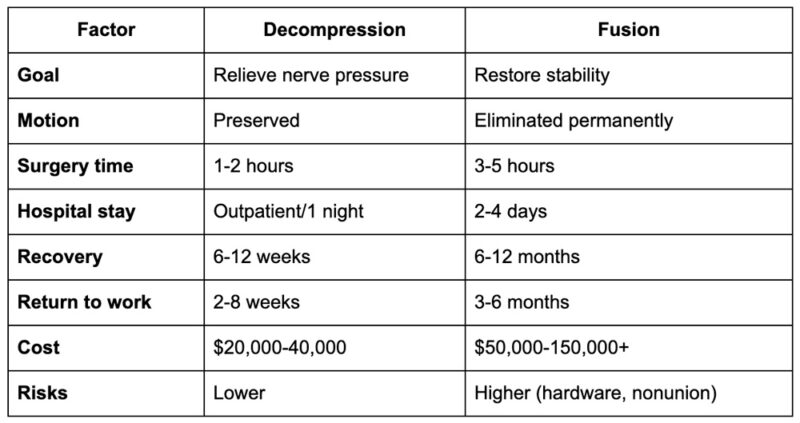
Recovery: 6-12 weeks
See more: Is Spinal Decompression Right for You?
What Is Spinal Fusion?
Purpose: Permanently join two or more vertebrae using screws, rods, and bone grafts.
Common techniques:
- PLIF (back approach)
- TLIF (side approach)
- ALIF (front approach)
Best for:
- Severe instability
- Spondylolisthesis (slipped vertebra)
- Spinal fractures
- Severe scoliosis
Recovery: 6-12 months for complete fusion
Why These Procedures Exist
- Nerve compression causes pain → Decompression creates space for nerves
- Spinal instability causes chronic pain → Fusion eliminates excessive movement
Sometimes you need both: Remove compression first, then stabilize the spine with fusion hardware.
Research by Ghogawala et al. (New England Journal of Medicine) found combined procedures work best when instability exists.
Spinal Decompression vs Fusion: Quick Comparison
When Is Each Treatment Needed?
Decompression Alone Works When:
- Spine remains stable after removing pressure
- Simple disc herniation without degeneration
- Isolated pinched nerve
- No excessive vertebral movement on X-rays
Fusion Is Required When:
- Removing material creates dangerous instability
- Pre-existing spondylolisthesis (slipping vertebra)
- Severe spinal deformity
- Multiple levels need extensive decompression
Red Flags Requiring Fusion Immediately:
- Progressive vertebral slippage
- Unstable fractures
- Severe deformity affecting organs
- Structural destruction from tumor/infection
Recovery Timeline Comparison
Decompression Recovery:
- Week 1: Walking same or next day
- Weeks 2-4: Return to desk work
- Weeks 6-8: Return to physical work
- Weeks 4-8: Physical therapy
Fusion Recovery:
- Days 1-3: Walking with assistance
- Weeks 6-8: Return to desk work
- Months 3-6: Return to physical work
- Months 3-6: Physical therapy
- Months 6-12: Complete bone fusion
Alternatives Before Surgery
As a chiropractor Huntsville patients trust for 30 years, I always recommend exhausting conservative options first – unless emergency conditions exist.
Proven Non-Surgical Treatments:
- Chiropractic care
- Spinal adjustments reducing nerve irritation
- Effective for disc-related pain without instability
- Non-surgical spinal decompression
- Gentle traction creating negative disc pressure
- 71% avoid surgery (Apfel et al., Neurological Research)
- Physical therapy
- Core strengthening and flexibility
- Proper body mechanics training
- Injections
- Epidural steroids for temporary relief
- Buys time for natural healing
- Lifestyle modifications
- Weight loss
- Ergonomic improvements
- Activity adjustments
- Smoking cessation
When Conservative Care Works:
- Mild to moderate disc problems
- Early stenosis without severe instability
- Muscle-related pain patterns
- 60-80% success with committed patients
Make the Right Choice for Your Spine
Understanding spinal decompression and fusion differences empowers confident treatment decisions aligned with your goals.
At North Alabama Spine & Rehab, we help patients explore every conservative option before considering surgery. Sometimes non-surgical spinal decompression therapy resolves symptoms completely. Other times, surgery becomes medically necessary and we help you understand exactly what to expect.
Schedule your comprehensive evaluation today. We’ll review your imaging, explain what’s causing your symptoms, and discuss all treatment options – from conservative care to surgical referral when appropriate.
Don’t make surgical decisions without understanding all your options. Your spine deserves expert attention from professionals who prioritize your long-term function and quality of life.
Frequently Asked Questions
Can decompression prevent fusion?
Sometimes. If decompression relieves symptoms without creating instability, fusion can be avoided.
Is fusion permanent?
Yes. Once bones fuse (6-12 months), it’s permanent.
Is non-surgical decompression effective?
70-80% success for appropriate candidates (disc bulges without instability).
Which is safer?
Decompression carries fewer risks, but “safer” doesn’t matter if your condition requires fusion.
How long is fusion recovery?
6-8 weeks initial recovery. 3-6 months return to full activities. 6-12 months complete fusion.
When should I consider surgery?
After 6-12 weeks conservative care fails, or immediately if a neurological emergency exists.