
Spinal Decompression for Degenerative Disc Disease: Does It Help?
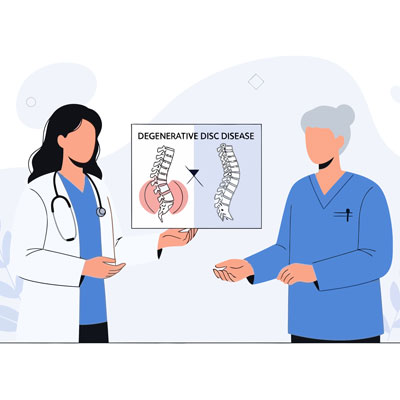
Spinal decompression for degenerative disc disease is a non surgical treatment that uses controlled traction to gently stretch targeted areas of the spine. For some people with disc related back or neck pain, it may help reduce pressure on sensitive spinal structures and make movement more comfortable.
Degenerative changes do not always cause pain, and spinal decompression is not appropriate for everyone. At North Alabama Spine & Rehab in Huntsville, AL, we first look at your symptoms, spinal health, and function to determine whether decompression may fit into your treatment plan.
Understanding degenerative disc disease
Degenerative disc disease (DDD) refers to age related changes in the discs between the vertebrae of the spine. These discs act as cushions between the bones and help the spine move comfortably.
Over time, spinal discs can lose water content, become thinner, and become less flexible. These changes are a normal part of aging and do not always cause symptoms. When symptoms do occur, DDD may be associated with back or neck pain, stiffness, or pain that travels into an arm or leg.
Disc degeneration can also occur alongside other problems, including bulging or herniated discs.
Importantly, finding disc degeneration on an X-ray or MRI does not automatically mean it is the source of your pain. Research summarized by the National Library of Medicine notes that imaging findings do not always correlate with chronic pain or the future need for surgery.
How does spinal decompression work for degenerative disc disease?
Non surgical spinal decompression uses a specialized table to apply controlled traction to specific areas of the spine. The treatment alternates between gentle pulling and relaxation rather than placing one constant force on the back or neck.
The goal is to change the mechanical forces acting on the affected spinal area and reduce stress on sensitive structures.
During a typical treatment:
- You are positioned comfortably on the decompression table.
- A harness helps target the appropriate area of the spine.
- The system applies controlled traction based on your treatment needs.
- The spine moves through gradual traction and relaxation phases.
How may spinal decompression help degenerative disc disease?
For people with symptomatic disc degeneration, spinal decompression may help by reducing stress on affected spinal structures and nearby nerves. This may support pain relief and more comfortable movement.
Reducing pressure on affected spinal structures
Degenerative discs can change how the vertebrae and surrounding structures handle pressure.
Controlled traction gently separates targeted spinal segments during treatment. For selected patients, changing these forces may reduce mechanical stress around a painful area.
Relieving irritation around nearby nerves
Disc degeneration sometimes occurs together with a bulging or herniated disc. These changes can contribute to irritation or compression around nearby nerve roots.
When a nerve is involved, symptoms may extend beyond the back or neck. You might experience pain, tingling, numbness, or other symptoms that travel into an arm or leg.
Decompression may be considered when reducing mechanical pressure around the affected area could help manage these symptoms.
Supporting movement and daily function
Pain and stiffness can make everyday activities such as sitting, standing, bending, or walking uncomfortable.
When spinal decompression is appropriate, reducing stress around the affected area may make movement more comfortable and help patients participate in other parts of a rehabilitation plan.
Who may benefit from spinal decompression?
Spinal decompression may be considered for people with conditions or symptoms such as:
- Persistent disc related back or neck pain
- Degenerative disc changes associated with symptoms
- Bulging or herniated discs
- Sciatica or other radiating symptoms
- Pain that continues despite basic conservative measures
- A desire to explore non surgical treatment when appropriate
The important question is whether the findings match your symptoms.
When is spinal decompression not appropriate?
Spinal decompression may not be appropriate when symptoms suggest a more serious problem that needs medical evaluation first. Seek prompt medical care for:
- New loss of bowel or bladder control
- Numbness around the groin or saddle area
- Severe or rapidly worsening weakness in an arm or leg
- Severe pain after a significant fall, collision, or other trauma
- Back pain with fever, chills, or other signs of infection
These symptoms can point to problems that require further testing or different treatment. For this reason, we evaluate your symptoms and health history before determining whether spinal decompression is appropriate.
What to expect during spinal decompression treatment
Treatment begins by determining what may be causing your symptoms and whether decompression is appropriate.
If decompression is recommended, you lie on a specialized table while a harness helps position the treatment area. The equipment then applies controlled forces to the targeted part of the spine.
Treatment settings are based on the individual rather than using the same amount of traction for everyone. We also monitor how your symptoms and function respond over time.
Not every type of back pain responds the same way, so determining whether spinal decompression is right for you starts with identifying what may be contributing to your symptoms.
Spinal decompression for degenerative disc disease at North Alabama Spine & Rehab
At North Alabama Spine & Rehab, we look beyond an imaging finding before recommending treatment. We consider where you hurt, whether symptoms travel into an arm or leg, how you move, and how the problem affects your daily activities.
When spinal decompression is appropriate, we use Accu SPINA or the MTD 4000 Decompression System as part of a non surgical approach. Decompression may also be combined with chiropractic care, exercise, or other conservative therapies based on your needs.
This allows us to focus treatment on your symptoms and function rather than assuming that every degenerative disc requires the same approach.
Conclusion
Degenerative disc disease does not always require surgery, and the right treatment depends on your symptoms and needs. If disc related pain continues to affect your daily life, contact us to find out whether spinal decompression may be appropriate for you.
Frequently asked questions
Is spinal decompression painful?
Spinal decompression uses gentle, controlled traction and is generally designed to be comfortable. Tell your provider if you experience increased pain or unusual symptoms.
How long does spinal decompression take to work?
There is no set timeline. Results vary depending on your condition, symptoms, and response to treatment.
Can spinal decompression help a degenerative disc in the lower back?
It may help some people with symptomatic lumbar disc degeneration, depending on the cause of their pain and other symptoms.
Can degenerative disc disease be treated without surgery?
Yes. Many people begin with conservative options such as exercise, rehabilitation, chiropractic care, or other non surgical treatments.