
Why Does My Lower Back Hurt When Standing?
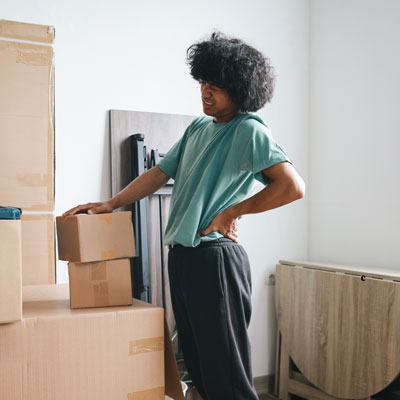
If your lower back hurts when standing, the cause may be muscle fatigue, joint irritation, or an underlying spinal condition. Standing for long periods can make existing discomfort worse, especially when your back muscles become tired.
Some people develop pain after standing for several hours, while others feel it immediately after getting up from a chair. Understanding these differences can help you recognize possible causes and choose appropriate ways to manage your symptoms.
Why does standing cause lower back pain?
Your lower back supports your upper body and helps maintain balance. When you stand, the muscles surrounding your spine work continuously to keep you upright.
Standing still for extended periods can tire these muscles and increase discomfort in sensitive joints. Certain spinal conditions may also become more painful when your back remains upright.
For example, people with lumbar spinal stenosis often experience symptoms while standing or walking but feel better when sitting or leaning forward.
However, pain while standing does not necessarily mean your spine is damaged. Factors such as muscle strength, daily activities, and existing health conditions can influence how your back responds to standing.
Common causes of lower back pain when standing
Lower back pain while standing can result from muscle fatigue, joint irritation, or conditions affecting the spine and nerves. Common causes include:
- Muscle strain and fatigue: Standing for long periods, heavy lifting, or unfamiliar activities can overwork your back muscles, causing soreness, tightness, or a dull ache.
- Poor standing posture: Staying in one position or shifting your weight unevenly may increase muscle tension and discomfort, especially during prolonged standing.
- Lumbar spinal stenosis: Narrowing around spinal nerves can cause back or leg pain that worsens when standing or walking. Symptoms often improve when sitting or leaning forward. Chiropractic care for spinal stenosis may be considered for selected patients.
- Arthritis and facet joint pain: Irritation or age related changes in the small joints of your spine may cause stiffness and pain, particularly when standing or bending backward.
- Sacroiliac joint dysfunction: Problems involving the joints connecting your spine and pelvis can cause pain in the lower back, buttocks, or hips, especially when shifting weight.
- Herniated or degenerative discs: Changes in spinal discs may contribute to lower back pain or irritate nearby nerves. A herniated disc can also cause sciatica, leading to pain that travels down the leg.
What does your lower back pain pattern mean?
The timing and location of your pain may suggest possible causes.
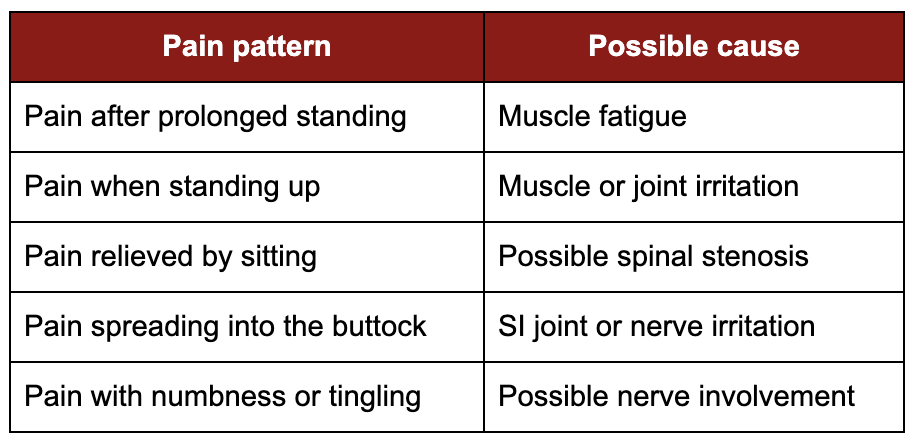
Muscle related discomfort often feels like soreness or tightness in the lower back. Nerve related symptoms may include burning, tingling, numbness, or pain traveling into the leg.
However, these patterns overlap. Spinal stenosis, disc problems, and joint conditions can produce similar symptoms.
A symptom pattern is a clue, not a diagnosis. A healthcare professional may need to assess your movement, strength, sensation, and medical history to determine the cause.
How to relieve lower back pain when standing at home
Simple changes may reduce discomfort and help you tolerate standing more comfortably.
1. Change positions regularly
Avoid standing still for long periods. Take short walking or sitting breaks when possible to reduce muscle fatigue.
2. Adjust your standing habits
Distribute your weight comfortably and avoid locking your knees. When standing at a counter, try resting one foot on a stable footrest and switching sides occasionally.
3. Try gentle stretching
Gentle knee to chest stretches, hip flexor stretches, and pelvic tilts may reduce stiffness. Move slowly and stop if symptoms worsen.
4. Strengthen your core muscles
Exercises such as modified bridges and bird dogs can help improve muscle strength and support daily movement. Start gradually and choose exercises that do not increase pain.
5. Use heat or cold
Heat may relieve muscle tightness, while cold packs may ease discomfort after a recent strain. Wrap packs in a towel and apply for 15 to 20 minutes.
6. Wear comfortable footwear
Shoes that fit properly and provide comfortable support may reduce fatigue during prolonged standing.
If you regularly work on hard surfaces, a suitable standing mat may also improve comfort. However, footwear alone cannot treat an underlying spinal condition.
What treatments can help lower back pain when standing?
Treatment depends on the cause and severity of your symptoms. Common options include:
- Physical therapy: Exercises to improve strength, flexibility, and movement.
- Chiropractic care: Spinal manipulation and movement guidance may help certain types of mechanical back pain.
- Medication: Pain relievers may provide temporary relief when medically appropriate.
- Specialized treatment: Some conditions require additional evaluation or other medical interventions.
At North Alabama Spine & Rehab, we evaluate spinal and musculoskeletal concerns to help determine whether conservative treatment is appropriate.
Not every patient needs spinal adjustments or decompression therapy. The right approach depends on the diagnosis, symptom severity, and individual health needs.
When should you see a doctor for lower back pain?
Mild lower back pain often improves with simple lifestyle changes and self-care. However, persistent or worsening pain may require medical attention.
Schedule a medical evaluation if you experience:
- Pain lasting several weeks without improvement.
- Increasing difficulty standing, walking, or completing daily activities.
- Pain that repeatedly travels into your buttocks or legs.
- Persistent numbness, tingling, or weakness.
Seek emergency medical care if you develop new loss of bladder or bowel control, numbness around the groin, or severe or rapidly worsening leg weakness.
These symptoms may indicate serious nerve compression that requires urgent assessment.
Finding relief from lower back pain when standing
Lower back pain when standing may result from muscle fatigue, joint irritation, or underlying spinal conditions. While simple lifestyle changes can help, persistent discomfort may require professional evaluation.
At North Alabama Spine & Rehab in Huntsville, Alabama, Dr. Adam Shafran brings 30 years of chiropractic experience, a Doctor of Chiropractic degree from Life Chiropractic College, and certification in Chiropractic BioPhysics® (CBP). His background in spinal alignment and posture assessment helps guide individualized care for patients with lower back pain.
If standing has become painful or difficult, contact us to discuss your symptoms and treatment options.
Frequently asked questions about lower back pain when standing
Why does my lower back hurt when standing but not sitting?
Standing may aggravate tired muscles, irritated joints, or spinal stenosis. Sitting changes spinal positioning and may relieve pressure on sensitive structures.
Why does my lower back hurt when I stand up from sitting?
Muscle stiffness, joint irritation, or mechanical back problems can cause pain during this movement, especially after sitting for extended periods.
Is walking better than standing for lower back pain?
Walking may reduce stiffness and muscle fatigue. However, some conditions, including spinal stenosis, can make walking more uncomfortable.
Can standing desks make lower back pain worse?
Yes. Standing too long without changing positions can increase discomfort. Alternate between sitting, standing, and walking throughout the day.
Will lower back pain from standing go away on its own?
Many cases improve within a few weeks. Persistent, worsening, or recurring pain may require medical evaluation.